
Thailand's Shower Toilet Market: Future Prospects, Innovation, and Growth
The bathroom industry in Thailand is undergoing a noteworthy transformation, with the growing adoption of smart shower toilets reflecting shifts in consumer behaviour, technological adoption, and a rising focus on sustainability. While this segment remains a growing niche, it showcases significant potential due to increasing integration of smart home technology and heightened awareness of environmental issues.

Market Trends
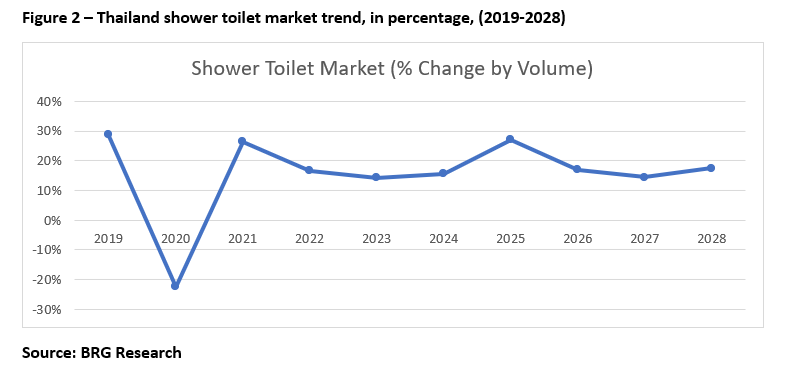
The market for shower toilets in Thailand witnessed strong growth, spurred by the expansion of residential construction and a heightened focus on hygiene and sanitation due to ongoing public health concerns. However, while the market is expanding, shower toilets remain niche, primarily due to their high costs. These products, once limited to high-end bathroom showrooms, are gradually reaching a broader but still limited audience in large residential units and department stores, increasing their accessibility to a wider range of customers.
The housing repair, maintenance, and improvement (RMI) segment dominates market demand as consumers increasingly upgrade from traditional WCs to smart shower toilets. The resurgence of Thailand's tourism industry post-pandemic has also driven demand in the hospitality sector. In terms of product preferences, rimless shower toilets and round/oval designs lead the market. Moreover, nearly all shower toilets in Thailand are electrically operated, emphasising the push towards technology-driven solutions.
Smart Technology Integration: The adoption of smart technology is driving the Thailand’s emerging shower toilet market, with features like automatic flushing, heated seats, and integrated bidet functions becoming standard in urban homes. These innovations align with global smart home trends and appeal to a relatively small yet growing segment of tech-savvy consumers in urban areas like Bangkok and Chiang Mai. IoT-enabled systems further enhance resource management by allowing users to monitor water usage and control flush schedules, contributing to both convenience and sustainability. This trend will continue to thrive as Thailand's middle class expands, with rising incomes driving demand for these premium products.
Focus on Water Efficiency: In Thailand's shower toilet market, water efficiency has become a significant factor influencing consumer choices. Products incorporating water-saving technologies, such as dual-flush mechanisms and sensor-activated toilets, are gaining popularity due to increasing awareness about environmental issues and water scarcity. The Thai government supports this trend through initiatives aimed at promoting water conservation; such measures, including the Pollutant Release and Transfer Registers law and pollution control efforts, help monitor and regulate water usage across the country, aligning with national sustainability goals. These water-efficient technologies help consumers reduce water consumption, appealing to a market that values eco-friendly living without sacrificing comfort.
Advanced Materials and Durability: The use of advanced materials in shower toilets, such as antimicrobial ceramics and stain-resistant surfaces, is driving market growth by improving hygiene, durability, and aesthetic appeal. These materials help reduce the spread of germs and minimise cleaning efforts, which is particularly important post-pandemic. The real estate and hospitality sectors are key drivers of this trend, as demand for long-lasting, low-maintenance products continues to grow. For homeowners and developers alike, the appeal lies in the combination of functionality and modern design, which ensures that these premium solutions are both practical and visually appealing.
Industry Initiatives and Government Support
Several companies are leading innovations in the market for shower toilets in Thailand. LIXIL Thailand, for example, has introduced touchless faucets and IoT-enabled solutions to meet the growing demand for hygiene. Their Hygiene Clean technology, featuring SiphonMax flushing technology, enhances flushing efficiency while minimising water consumption. LIXIL’s Comfort Clean ceramic glaze actively eliminates bacteria in toilet bowls, aligning with the increased focus on hygiene and convenience that consumers expect from modern bathroom solutions.
Kohler’s "Safe Water for All" initiative has improved sanitation in schools across Thailand, creating healthier learning environments. Such efforts reflect a broader commitment to enhancing public health, which can drive consumer awareness and demand for advanced sanitaryware, including smart shower toilets. Similarly, community engagement projects, like Sika Thailand’s initiative to build toilets in underfunded schools, help address sanitation issues, highlighting the importance of modern bathroom solutions in improving public health.
Thailand’s Department of Health has also launched the Healthy City initiative, which promotes effective water management and waste control, aligning with global sustainability standards like the Ottawa Charter and the Social Development Goals. By accrediting municipalities that meet health and sanitation standards, this programme encourages a focus on modern sanitary solutions. As communities strive to meet these standards, the demand for innovative shower toilets is likely to rise, reinforcing the market's potential for growth as consumers increasingly seek products that contribute to improved hygiene and sustainability in their homes.
Challenges
Despite the growing popularity of shower toilets, which are still considered a specialised market, challenges such as consumer education and price sensitivity persist. Many Thai consumers, particularly in rural areas, remain unfamiliar with the water efficiency and hygiene benefits these products offer. Manufacturers need to invest in targeted marketing campaigns to raise awareness and highlight long-term cost savings. Additionally, the relatively high cost of smart toilets remains a barrier, even as Thailand’s middle class expands. To address this, smart toilet companies are introducing more affordable entry-level models that prioritise essential features like water-saving mechanisms, making them accessible to a broader range of consumers.
Market Outlook
Looking ahead, the market for shower toilets in Thailand is poised for substantial growth during the forecast period (2025-2028), driven by increasing urbanisation, rising disposable incomes, and a growing focus on sustainability. As urbanisation advances and living standards improve, more consumers will have the financial capacity to purchase high-end products, like smart and water-efficient toilets. The expanding middle class, with its heightened awareness of smart home technology, is expected to further accelerate demand for these premium bathroom solutions as they seek to enhance their quality of life. Additionally, Thailand’s role as a regional manufacturing hub for bathroom fixtures positions the country to capitalise on increasing demand across Southeast Asia. This presents a significant export opportunity for Thai manufacturers, reinforcing the market's positive outlook for the forecast period.
Source: Amandeep Singh, BRG Research
To purchase the detailed report, go to our online shop : BRG Shower Toilet Reports
Or for more information please contact us at:
Email: europe@brggroup.com
Tel: + 44 20 8832 7860


