
Why Air Conditioners Costs More in India Now - The BEE Effect Goes Beyond Raw Materials
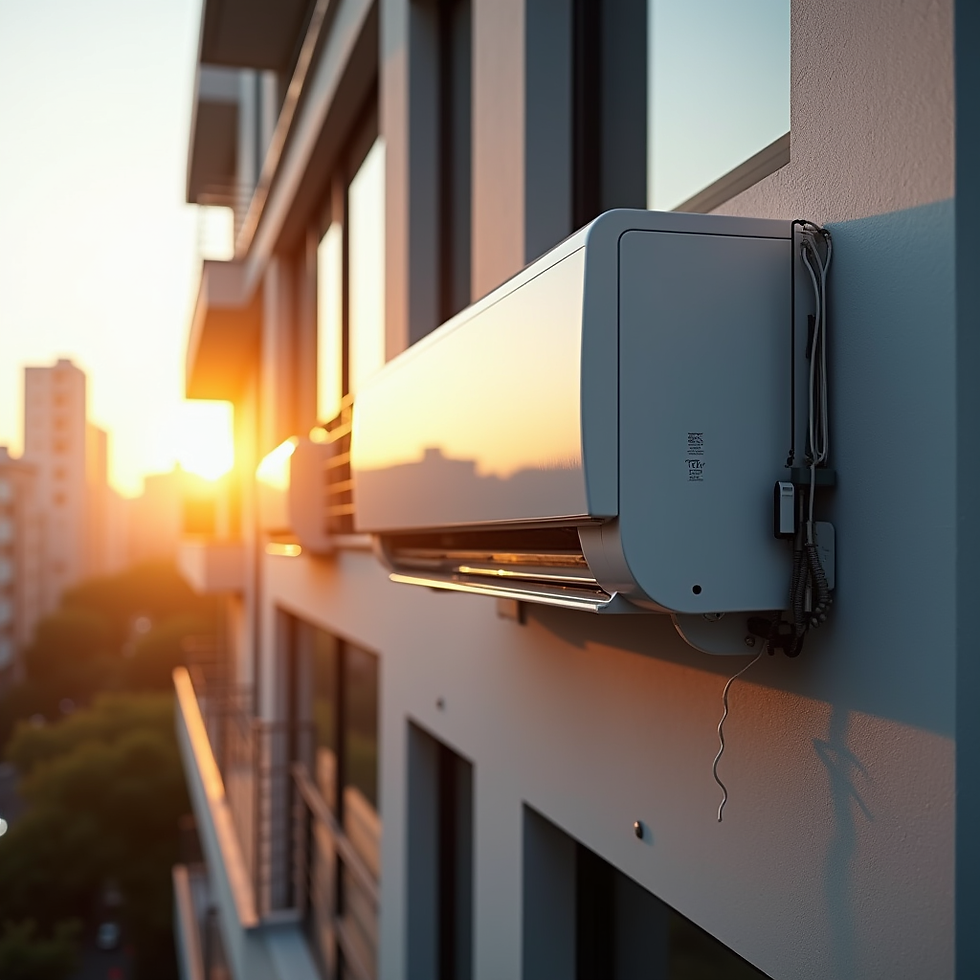
Revision of BEE Air-Conditioning Efficiency Standards Transforming India’s Air-Conditioning Industry
The Indian air-conditioner industry is in the midst of one of the biggest transformations it has seen in years. While consumers are noticing higher air-conditioner prices in 2026, the reasons go well beyond the familiar story of rising copper or aluminium costs.
AC prices have risen across the industry by an estimated 5-15% this season, driven by a mix of commodity prices, currency swings, freight costs and, most prominently, the rollout of new Bureau of Energy Efficiency (BEE) standards.
For years, price movements in the HVAC industry have been attributed to changes in copper prices, component costs, logistics costs and currency movements. All of those things are still in play in the market, but 2026 is a different animal.
This year's big development is the rollout of new energy efficiency standards by the Bureau of Energy Efficiency (BEE). Raw material inflation is cyclical in nature. Regulation permanently changes product design, manufacturing processes and industry standards. So, this is a cost issue, but it is also a reflection of the transition to a new generation of more efficient cooling products.
The Ongoing Battle with Raw Material Costs
Raw material costs have always been a sensitive point for the air-conditioning industry. Copper, aluminium, steel, electronic components and imported parts have a direct impact on the manufacturing cost. The prices of these materials rise it puts pressure on company margins and frequently results in price changes.
But raw material inflation isn’t a new obstacle for HVAC manufacturers. The industry has endured many commodity price cycles in the past and has responded with improved sourcing strategies, supply chain improvements and operational efficiencies.
Commodity prices can be affected by world market conditions. A manufacturer may pay more today but enjoy better conditions tomorrow. Raw material inflation is a recurring business challenge, not a structural change.
BEE Standards: A Structural Shift Rather Than a Cost Increase
The bigger change is the introduction of the new BEE star-rating standards in 2026. The revised framework is part of India’s larger strategy on energy efficiency to bring down electricity consumption, reduce peak power demand during hotter summers, and improve the efficiency of cooling appliances. Given the continued exponential growth of air-conditioners across India, increasing their efficiency has become a national priority. The revised norms are based on higher Indian Seasonal Energy Efficiency Ratio (ISEER) benchmarks which measure the performance of an air conditioner over a range of Indian climatic conditions instead of a single laboratory test. This provides a more realistic indication of the annual energy consumption.
To reach these more challenging targets, manufacturers are investing in:
More efficient inverter compressors
Advanced heat exchanger designs
Optimised refrigerant flow systems
Smarter electronic controls and inverter algorithms
Improved system optimisation
Extensive testing and fresh certification processes
These changes greatly increase the complexity and cost of product development. So, manufacturers are not just selling the same air conditioners at higher prices, they are designing a whole new generation of products that can meet much higher efficiency standards.
Industry Response: Major Manufacturers Adjust Prices
The air conditioning business is already feeling the impact of rising costs and new efficiency standards. Leading manufacturers have signalled or announced they will raise prices in 2026 as they try to cope with the double whammy of rising input prices and the move to more energy-efficient products.
Daikin India has announced price increases across its air-conditioner portfolio, citing rising costs and evolving market conditions. The company is also working to increase the portfolio of its higher efficiency products to meet the latest energy-performance requirements.
Voltas has indicated that increasing copper prices, currency pressures and the additional manufacturing investments required under the revised BEE framework are likely to contribute to higher AC prices.
Blue Star has also said that the industry is under pressure from commodity inflation and a move to more efficient air-conditioning systems.
Other big players such as LG Electronics, Haier India and Mitsubishi Heavy Industries Air-Conditioning are also operating in a space where manufacturers are trying to mitigate higher costs with investments in advanced cooling technologies.
What’s different about 2026 is that manufacturers are facing multiple structural pressures all at once. Commodity inflation, exchange-rate volatility and freight costs are coming together with mandatory efficiency upgrades, making this year’s price increases fundamentally different than previous commodity-driven pricing cycles.
Why a 5-Star AC Will Be Different in 2026
The new BEE framework has also altered the meaning of star rating. A 5-Star rated air-conditioner under the old standards is not necessarily a 5-Star rated air-conditioner under the new 2026 regime. That is not to say that the product is less efficient, it simply means the benchmark has become way more demanding.
A 5-Star rating in 2026 will be a higher standard of energy performance than a 5-Star rating under the previous standards.
The same star rating requires manufacturers to improve engineering, components and research and development.
As the purchase price rises, it is not only because of higher manufacturing costs but also because the consumer is getting a product that is more energy efficient.
Why Regulation Matters More Than Commodity Prices
The difference between raw material inflation and regulation change is huge. Commodity prices impact manufacturing costs, but regulations shape the long-term future of an entire industry.
Copper prices could be lower in the future. Supply-chain snarls may be easing. The exchange rate could settle.
But once higher standards of efficiency are mandated, manufacturers have to design products to meet those standards. The investment in research, engineering, manufacturing capability and testing becomes a fixed element of the industry cost structure. The revised BEE standards therefore represent a structural transformation, rather than a temporary market fluctuation.
Changing Consumer Priorities
The standards are also changing the way consumers see air conditioners. Historically, purchase decisions were largely based on upfront price. There is a greater emphasis today on long-term operating costs. An air conditioner that is more efficient may cost more in the beginning, but the savings it offers over the life of the unit in lower electricity consumption can be significant.
Consumers are also becoming more aware that the BEE Star label needs to be seen in conjunction with the ISEER value and the validity period of the label. Two products in the same star rating can be in different BEE rating periods so direct comparison can be misleading unless the applicable standards are considered.
The rising electricity tariffs and ever more intense summers are making life-cycle cost and energy efficiency as important as purchase price.
Find out more in our latest edition South Asian's reports.
Source: BRG Research
Geetika Tandon
To purchase the detailed report, visit our online shop. BRG Heating and Cooling Report
For more information, please contact us at:
Email: europe@brggroup.com
Tel: + 44 (0) 20 8832 7860


