
U.S. Heat Pumps Growth Enters New Phase Amid Changing Incentives and Market Forces
Updated: Mar 27
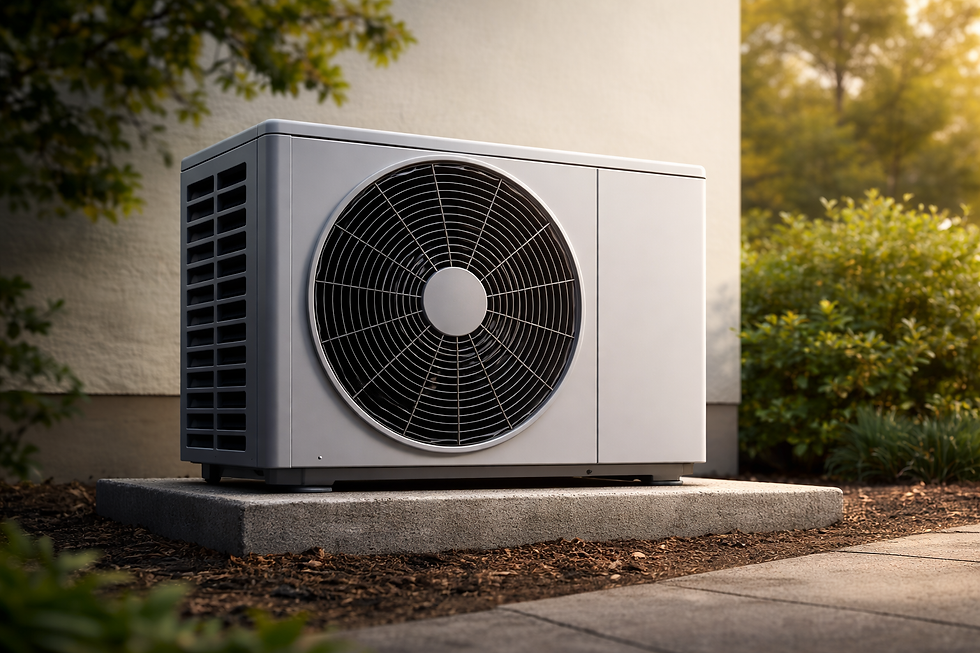
The U.S. heat pump market has entered a new phase, shaped by the expiration of federal incentives, rising state-level support, and evolving consumer preferences. While the Inflation Reduction Act (IRA) played a pivotal role in accelerating adoption through its generous tax credits and rebate programs, the conclusion of those federal incentives has affected market dynamics. Growth remains supported, but momentum is now increasingly influenced by the availability of state and utility programs, shifts in consumer economics, and ongoing advancements in cold-climate performance. Despite the changes, the broader electrification trend remains intact, positioning heat pumps as a core technology in the transition.
Market Response to IRA Incentives
The IRA’s key provision for heat pumps was a 30% federal tax credit, capped at $2,000 per year, available from 2023 through the end of 2025. In parallel, the act allocated nearly $8.8 billion for the HOMES and HEAR rebate programs, designed to support whole-home energy upgrades, including heat pump systems. These incentives significantly reduced upfront costs and helped drive record demand, especially in 2024, when heat pump shipments surged.
In 2023, however, the market experienced a temporary slowdown as consumers and contractors waited for the incentives to become fully accessible. Once implemented, demand rebounded sharply, with shipments in 2024 outpacing gas furnace sales by a wide margin. This momentum was fuelled by growing awareness, expanded contractor capacity, and confidence in the technology’s performance.
End of Federal Credits and a Cooling Market
The expiration of the 25C tax credit marked an important policy milestone. Although the credit helped support adoption, many systems never fully qualified due to system cost thresholds. The removal of this incentive, alongside other market factors, has introduced some headwinds particularly among price-sensitive buyers and contractors navigating the evolving financial landscape.
Toward the latter part of the policy window, market activity began to reflect this transition. Some manufacturers noted a shift in order patterns and installation pacing, influenced by changing policy expectations, financing conditions, and customer timing preferences. While the federal tax credit played a role, it was one of several factors contributing to a more complex and transitional market environment.
State and Utility Incentives Fill the Gap
With federal tax credits now phased out, state-level and utility-based programs have taken the lead in supporting heat pump adoption. Several states including California, New York, Massachusetts, Oregon, and Vermont offer generous rebates that can exceed $10,000 per household. In addition, utilities continue to provide point-of-sale rebates, performance incentives, and time-of-use programs to boost affordability.
Crucially, federal support has not disappeared entirely, but it has shifted. Nearly every state has applied for IRA funding to implement state-administered HOMES and HEAR rebates, but many see these funds on hold or under review by the Department of Energy. Once implemented, however, these programs will offer discounts at the point of sale rather than tax credits, ensuring that low- and moderate-income households can still access up to $4,000 to $8,000 per installation, depending on income and project scope.
Impact varies by region. States with robust electrification goals and early program deployment like New York, California, and Massachusetts are better positioned to maintain adoption momentum. In contrast, states with weaker policy support may experience slower uptake.
Cold-Climate Heat Pumps Unlock Northern Markets
One of the most promising trends supporting long-term adoption is the growth of cold-climate heat pump technology. These advanced systems maintain full heating capacity in sub-freezing conditions and deliver efficiency levels that often outperform gas systems.
This performance breakthrough has opened new markets in colder regions, where heat pumps were previously seen as unviable. Although consumer awareness remains limited, manufacturers and utilities are actively investing in education, outreach, and product support. Federal programs like the DOE’s Cold Climate Heat Pump Challenge are accelerating the availability of next-generation systems designed specifically for northern climates.
Outlook for 2026 and Beyond
While the pace of adoption may be adjusting from earlier highs, strong market fundamentals continue to support long-term momentum. Electrification goals, consumer demand for energy-efficient solutions, and product innovations especially in cold-climate performance are expected to keep heat pumps central to the U.S. HVAC transition. In the absence of federal tax credits, the role of state and utility incentives becomes increasingly important, helping to sustain interest and affordability. The shift toward electric heating is not reversing; rather, it is entering a new phase where market forces, regional policies, and product performance now guide the next chapter of growth.
Aashutosh Chauhan
Source: BRG Research
Find out more in our latest edition of USA HVAC report.
To purchase the detailed report, visit our online shop. BRG Heating and Cooling Report
For more information, please contact us at:
Email: europe@brggroup.com
Tel: + 44 (0) 20 8832 7860


