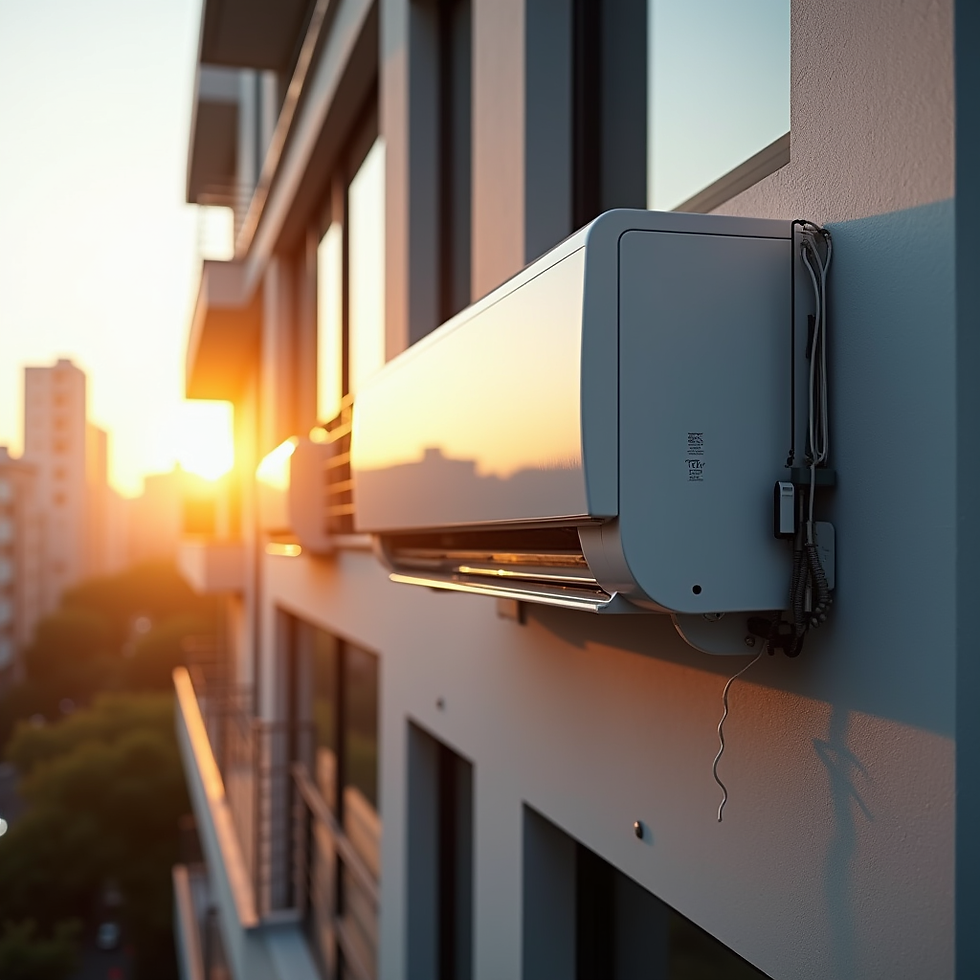
How Consumer Preference Has Driven the Dominance of Japanese Air Conditioners in Australia
- brg_news_room
- May 15
- 5 min read
Updated: May 19
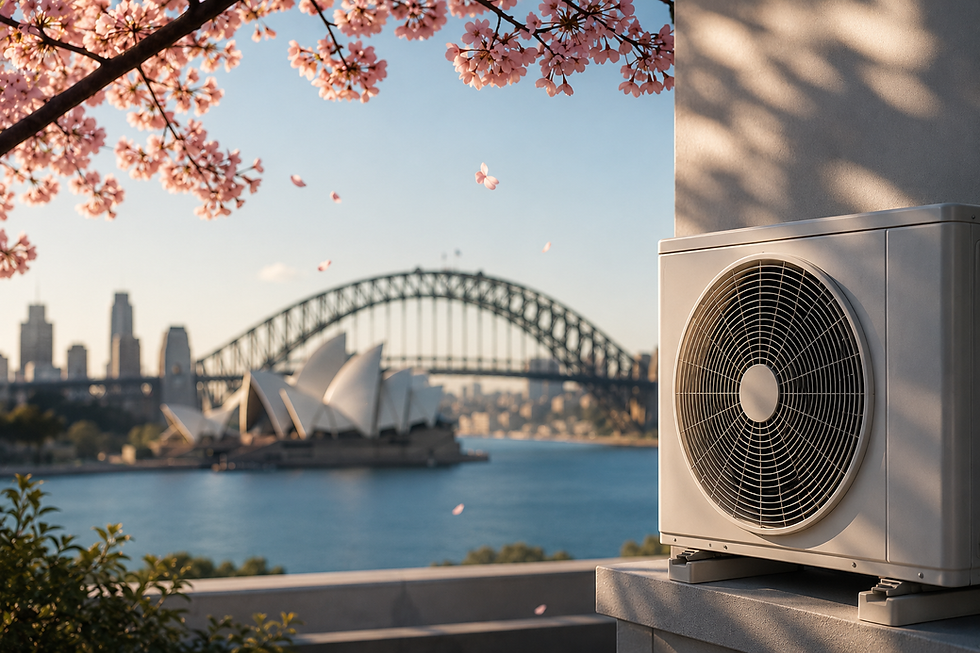
The Australian air conditioner market is significantly influenced by Japanese brands, with consumer preference playing a key role. Brands like Daikin, Mitsubishi Electric, Mitsubishi Heavy Industries (MHI), Fujitsu and Panasonic consistently top buyer satisfaction surveys, command premium prices, and enjoy loyalty that no other competitor has successfully eroded. Understanding why Australian consumers gravitate so strongly toward Japanese brands reveals a clear pattern: a deep, sustained preference for reliability, energy efficiency, quiet operation, and trusted after-sales service, reinforced over decades.
A Market Built on Consumer Trust
Australia's adoption of air conditioning grew rapidly from the late twentieth century from roughly 25% of homes in the mid-1980s to nearly 60% by 2014. Japanese brands were present from the outset. Mitsubishi Heavy began selling units through local distributors as early as 1975, and Daikin built a national network of over 500 specialist dealers across Australia. As consumers made their first air conditioning purchases, Japanese products earned a reputation for outlasting the competition, and word-of-mouth reinforced that trust generation after generation.
Today, that trust is reflected in multiple industry surveys and consumer perception studies, which consistently rank Japanese manufacturers at the top of the Australian market for air‑conditioning systems. Across these surveys, brands such as Daikin, Mitsubishi Heavy Industries, Mitsubishi Electric, Panasonic and Fujitsu are rated highly by a large majority of users on key attributes including performance, features, quiet operation, value for money and overall satisfaction. These results are not marginal or isolated; rather, they point to a consistent, multi‑year pattern in which Japanese brands occupy the top tier of customer trust and satisfaction, while Korean and Chinese competitors tend to rank below on the same measures.
Australia’s Lower Price Sensitivity Supports Premium Brand Dominance
Australia’s position as a high‑income, developed economy plays a critical role in shaping air‑conditioner purchasing behaviour. Compared with many Asian markets, Australian households tend to exhibit lower sensitivity to upfront appliance costs and place greater emphasis on long‑term value, operating costs, and risk reduction. Air‑conditioning purchases are typically viewed as long‑term household investments, particularly given the extreme summer conditions in many regions and the expectation that systems will operate intensively for a decade or more.
This economic context favours manufacturers able to justify premium pricing through durability, performance consistency, and lifecycle efficiency, rather than lowest‑cost entry points. Japanese brands have historically aligned with these priorities, positioning themselves not as commodity suppliers but as providers of dependable, engineered solutions. As a result, Australian consumers show a greater willingness to pay higher upfront prices in exchange for confidence in reliability, lower energy bills over time, and assured after‑sales support, conditions that materially weaken price‑led competition from lower‑cost Asian alternatives.
Reliability and Build Quality: The Core Driver
When Australians are surveyed on why they choose a particular air conditioning brand, reliability and durability come out on top. The perception that Japanese-engineered units 'go 15 or more years without fail' is widely shared on consumer forums and validated in independent testing. Industry survey reliability results indicate that around nine in ten users of Mitsubishi Electric and Fujitsu systems report dependable, trouble‑free performance, figures that translate directly into purchase decisions in a market where units are expected to survive punishing summer heat season after season.
This reliability advantage is not accidental. Japanese manufacturers have invested heavily in inverter compressor technology, which runs continuously at variable speeds rather than cycling on and off. The result is more precise temperature control, reduced mechanical stress, and significantly longer operational lifespans. For Australian consumers who run systems for months at a stretch during extreme summers, this engineering difference has real, tangible value.
Energy Efficiency and the Policy Tailwind
Australia has some of the highest residential electricity prices among developed nations, which makes running costs a central factor in purchasing decisions. Japanese brands have capitalised on this by leading on energy efficiency their models consistently achieve high star ratings under Australia's Minimum Energy Performance Standards (MEPS), and many exceed the minimum by a significant margin. The widespread adoption of R32 refrigerant and advanced inverter technology means consumers face meaningfully lower electricity bills over a system's lifetime compared to cheaper alternatives.
Government policy has amplified this preference. State rebate schemes Victoria's VEU program and NSW's Energy Savings Scheme provide cash-back incentives of $500 to over $1,600 on high-efficiency reverse-cycle systems. These programs effectively lower the net cost of premium-tier units, the tier that Japanese brands dominate, and steer cost-conscious buyers upward from entry-level alternatives. The policy environment and consumer preference have reinforced each other: as efficiency standards tighten, Japanese models already engineered to exceed those standards continue to be the logical choice.
Quiet Operation and Advanced Features
Beyond the functional metrics of reliability and efficiency, Japanese air conditioners have won consumers through superior comfort features. Noise levels are a particular concern for households wanting overnight cooling in bedrooms. Mitsubishi Electric's MSZ-AP series, for example, operates at whisper-quiet levels specifically marketed for sleeping environments, and this feature resonates strongly in consumer reviews.
Smart home integration has become another key differentiator. Most Japanese models now ship with built-in Wi-Fi, compatibility with voice assistants such as Alexa and Google Home, and app-based control features that align with the connected-home expectations of today's buyers. Health-conscious consumers have also responded to air filtration innovations: Daikin's Alira X carries approval from the National Asthma Council's Sensitive Choice program, while Panasonic's nanoe-X technology provides enhanced purification. These layers of value beyond basic cooling give Japanese brands a qualitative edge that cheaper competitors have found difficult to replicate at the same price point.
After-Sales Service and the Value Equation
Australian consumers have shown a consistent willingness to pay a premium for Japanese air conditioners, and a large part of that willingness is anchored in after-sales confidence. Standard warranties from Daikin, Mitsubishi and Fujitsu run to five years on parts and labour, and extensive dealer networks mean that servicing, repairs and replacement parts are accessible throughout the country. Buyers report that the availability of reliable service is as important as the product itself particularly for ducted whole-home systems where a fault affects every room.
This contrasts with the experience some consumers have had with cheaper brands. Chinese manufacturers such as Hisense and Midea have grown their presence at the value end of the market, and Korean brands like LG have invested significantly in expanding their Australian dealer support. However, consumer perception still associates non-Japanese brands with higher failure rates and less comprehensive service networks. Until that perception shifts through sustained performance and presence, Japanese brands retain a structural advantage built not just on engineering, but on trust.
Conclusion
The dominance of Japanese air conditioners in Australia is the product of consumer preference, not simply marketing spends or distribution reach. Decades of reliable performance have created loyalty that compounds: satisfied owners recommend Japanese brands to family, new buyers default to proven names, and retailers stock accordingly. Energy efficiency, quiet operation, smart features and dependable warranties have each reinforced the original foundation of trust in build quality. Government efficiency standards and rebate programs have further accelerated the cycle by favouring the premium-tier models at which Japanese manufacturers excel. Competitors are not standing still LG, Samsung, Hisense and Midea are all investing to close the gap but the consumer preference that built Japanese dominance remains the market's defining force.
Author: Aashutosh Chauhan
Source: BRG Research
To purchase the detailed reports, go to our online shop: BRG Heating and Cooling Report
Find out more in our latest edition Australia report:
For more information, please contact us at:
Email: europe@brggroup.com
Tel: + 44 (0) 20 8832 7860